Artificial Intelligence: How Can We Preserve Our Humanity in the Age of Machines?
Montreal
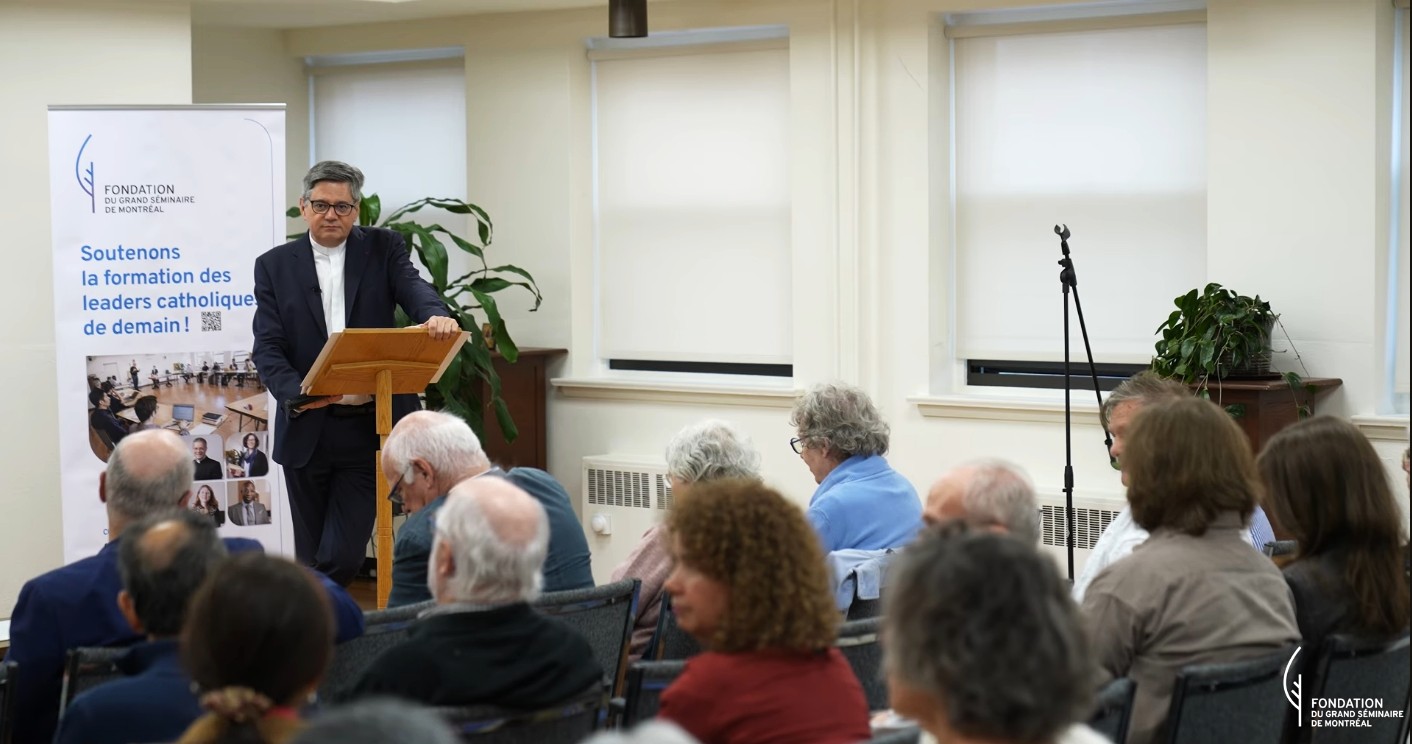
As part of the Dialogues et Espérance (Dialogue and Hope) conference series, organized by the Fondation du Grand Séminaire de Montréal, Fr. Éric Salobir, O.P., a French Dominican priest and expert in the ethics of emerging technologies, offered a reflection on the human and spiritual implications of artificial intelligence during a conference entitled “The Human and the Talking Machine: Ethical and Spiritual Perspectives on Our Technologies.”
Fr. Salobir explored the transformations brought about by artificial intelligence (AI) and the challenges it poses to society, particularly regarding human dignity, interpersonal relationships, and discernment.
Technology Is Advancing Faster Than Society
“The technology is mature, but society must also be mature.” This was one of the key messages emphasized by Fr. Salobir, who reminded participants that before focusing on what artificial intelligence can do, we must first reflect on the human beings who use it.
For the first time, we are interacting with machines capable of responding to us, engaging in conversations, and even giving the impression that they understand us. This new reality, however, carries certain risks, particularly the tendency to place excessive trust in these tools.
He pointed out that, unlike human relationships, which sometimes involve disagreements and confrontation, artificial intelligence may tend to provide answers that reinforce our existing opinions. Yet dialogue, differences, and even conflict are part of our humanity and contribute to our growth as social beings.
Preserving Our Human Abilities
Fr. Salobir also warned against growing dependence on these technologies. Using GPS as an example, he explained that someone who relies on it constantly may gradually lose their sense of direction. The same can happen to certain intellectual abilities when we systematically delegate tasks to machines.
Calculating, thinking, analyzing, and solving problems are all activities that contribute to our personal development. The danger, therefore, does not lie in technology itself, but in the risk of neglecting certain human capacities.
He also raised concerns about the standardization of ideas and AI-generated content. By repeatedly favouring similar responses, these tools could contribute to greater uniformity of thought at the expense of creativity, diversity, and critical thinking.
A Human and Collective Responsibility
For Fr. Salobir, the real question is not simply what artificial intelligence can accomplish, but rather how we choose to use and regulate it.
Who is responsible for decisions made with the assistance of these systems? How can ethical governance be ensured? How can we make certain that these technologies remain at the service of the common good?
Artificial intelligence remains a tool whose value largely depends on how we choose to use it.
A Hopeful Outlook on the Future
Despite the challenges discussed, Fr. Salobir offered a message of optimism, highlighting the many opportunities artificial intelligence presents, particularly in research, medicine, and innovation.
The challenge, therefore, is not to reject these technologies, but to ensure that they remain at the service of humanity, respecting human dignity and fostering human flourishing.
This reflection also echoes concerns expressed in Humanitas Caritas, attributed to Pope Leo XIV, particularly regarding the importance of technological development guided by ethics and the common good.
The conference concluded with an invitation to approach these transformations with discernment and a shared sense of responsibility. Beyond technological advances, what matters most is preserving what makes us human.
To delve deeper into the discussion and explore the full range of exchanges, watch the conference in its entirety on YouTube.
Comment
Comment
Add new comment