
Migration, Dignity, and Hope: Over 500 People Join International Webinar
Montreal
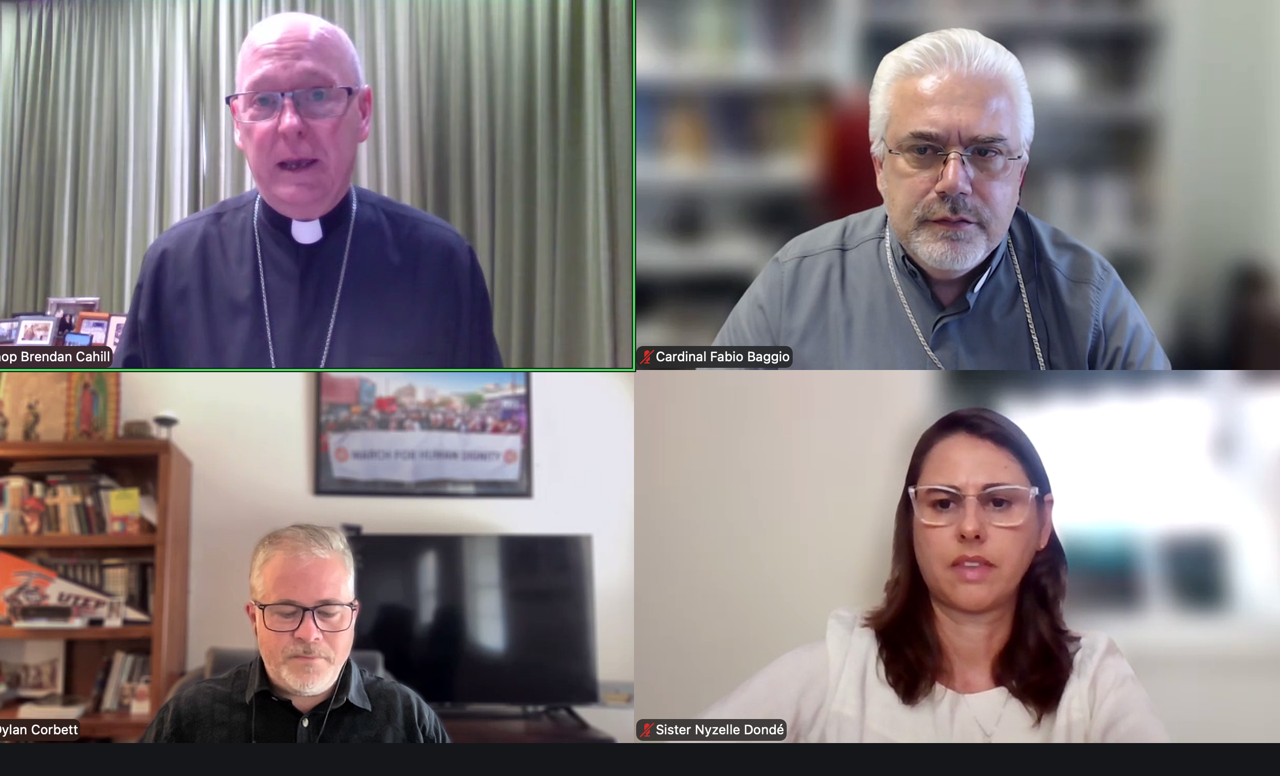
On July 16, more than 500 people from around the world came together online for a webinar dedicated to the dignity and rights of migrants — a moment of shared reflection, and also a concrete call to pastoral and political action.
The Diocese of Montreal is proud to have collaborated on this event with the Dicastery for Promoting Integral Human Development, OSMECA, Hope Border Institute, CELAM, Red Clamor, and SEDAC. Special thanks as well to Dylan Corbett, who moderated the session with great care and insight.
Three speakers gave the morning its depth: Cardinal Baggio, Bishop Brendan Cahill, and Sister Nyzelle. Here are the highlights of their remarks.
Cardinal Baggio: Dignity as the Foundation of Every Right
Cardinal Baggio opened the reflection by reminding participants that human rights are never granted by an authority — they are recognized, because they already exist, rooted in the dignity of every person from birth. "A person never loses their rights," he insisted, regardless of their situation: with or without a passport, with or without a visa, with or without regular status.
He pointed to the 1948 Universal Declaration of Human Rights as a foundational milestone, while stressing that, from a Christian perspective, these rights precede any legal recognition: they flow from the intrinsic dignity of the person, created in the image of God.
The Cardinal also referenced Pope Leo XIV's new encyclical, Magnifica Humanitas, which places the human person — unique and irreplaceable — at the center of every social, economic, and political decision. He recalled that Scripture gives particular attention to three categories of vulnerable people: widows, orphans, and foreigners — those who, historically, had no recourse to ordinary justice. "That is also the call we receive today as Church," he concluded, "to look toward those who face obstacles in the exercise of their rights, and to accompany them deeply."
Bishop Brendan Cahill: A Collegial Commitment Among U.S. Bishops
Bishop Brendan Cahill, of the Diocese of Victoria, Texas, presented the work carried out by the Catholic bishops of the United States, emphasizing the collegial nature of this commitment: last November, the body of bishops reiterated its commitment to advocate for immigration reform grounded in proportionate enforcement, humanitarian protection, family unity, and safe legal pathways.
In his rural diocese in South Texas, this commitment takes shape through three areas of action tied to the national plan You Are Not Alone and the Justice for Immigrants network: emergency and family support (through the organization CLINIC), solidarity through public prayer and witness, and pastoral accompaniment — including defending priests' right to visit detained persons.
"We realize the pastoral need of the incarcerated to know that Jesus never abandons us," he said, echoing Cardinal Baggio's words on the dignity of every person created by God.
Sister Nyzelle: Accompanying Migrant Mothers in the Dominican Republic
Sister Nyzelle shared a sobering account from the ground: since April of last year, new immigration measures in public hospitals across the Dominican Republic have created barriers to healthcare access for pregnant migrant women, with many now avoiding hospitals altogether out of fear of detention or deportation.
In response, her team has built a multidisciplinary project addressing the structural roots of vulnerability: lack of identity documents, social stigma, and access to a dignified birth. Over fourteen months, more than 150 mothers in situations of severe vulnerability have been accompanied; 65 have given birth, and around 25 deliveries received direct financial support — though nine mothers, tragically, lost their pregnancies. 95% of these women are in an irregular migration status, which prevents them from legally registering their children.
"Every number represents a lived story," she said. "Behind every mother we've accompanied, and every child who manages to be born in safer conditions, lies an opportunity to live with greater dignity and hope." She closed by recalling the widow of Nain: like her, these women face pain and uncertainty, but their story is a reminder that God never abandons those who suffer.
A Church Close to the Most Vulnerable
This webinar reaffirmed a conviction shared by all three speakers: human dignity depends on no document, no border, and no law — it precedes any legal recognition and calls the Church, at every level, to draw close to those living exclusion and vulnerability.
Thank you to everyone who took part, to our partners for their steady commitment, and to Dylan Corbett for moderating this gathering with such generosity. The work continues.
By Alessandra Santopadre
Assistant, Office for Cultural and Ritual Communities
Coordinator, Sponsorship Program for Refugees and Asylum Seekers
Archdiocese of Montreal
Comment
Comment
Add new comment